
How to Train Safely While Recovering from an Injury
Recovering from an injury doesn’t mean you have to stop training altogether. Many active people in Victoria dealing with pain or setbacks still want to stay consistent, but aren’t sure how to do it safely.
With the right approach—and guidance from physiotherapy or athletic therapy—you can continue exercising while supporting recovery, reducing pain, and avoiding re-injury. This guide will walk you through how to train safely while injured so you can stay active and come back stronger.
Why You Shouldn’t Stop Training Completely
One of the biggest misconceptions in injury rehab is that rest is always the best solution.
While short-term rest can help reduce irritation, complete inactivity often slows recovery. Movement plays a key role in healing by:
Promoting metabolic health
Maintaining strength and mobility
Preventing stiffness
Supporting nervous system function
If you’re dealing with an injury, you don’t have to stop training—you can simply modify your training thoughtfully.
Of course, there are exceptions. Consulting with your physiotherapist, chiropractor, or athletic therapist can help clarify the best plan for you.
Rule #1: Respect Pain (But Don’t Fear It)
Pain is a signal—but it’s not always a stop sign.
A simple guideline when exercising with an injury:
0–3 / 10 pain → Safe to continue
4–5 / 10 pain → Modify and monitor
6+ / 10 pain → Stop and reassess
Some discomfort during injury rehab is normal. However, intense pain, worsening symptoms, or pain that lingers into the next day are signs you may be doing too much.
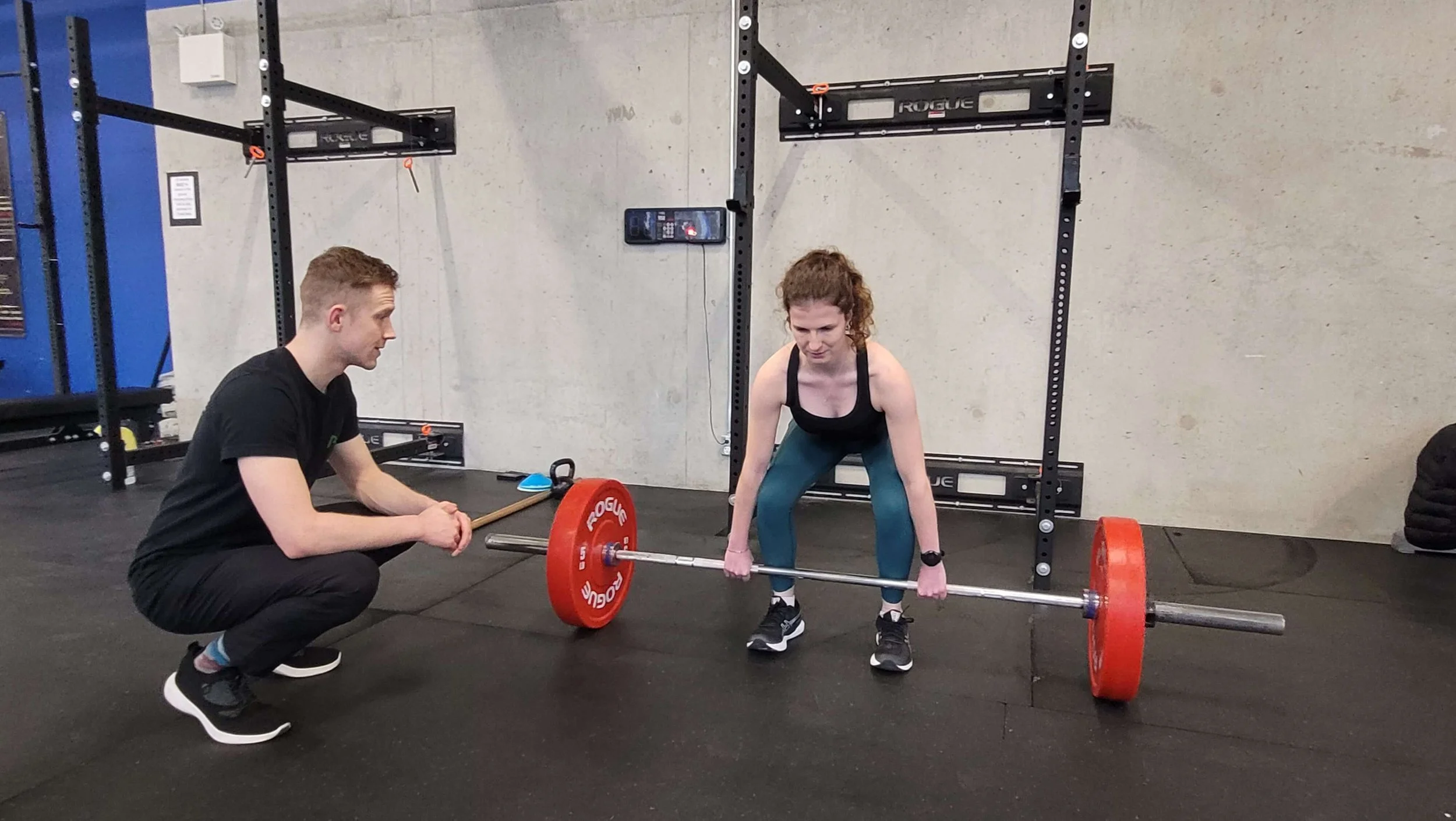
Rule #2: Modify, Don’t Eliminate Exercise
The first step for many injuries, especially overuse or chronic injuries, is to adjust activity.
Examples:
Knee pain → reduce squat depth or load
Shoulder pain → adjust pressing angle or range
Back pain → decrease range or focus on seated position movements
When your goal is continue being active, or recover as quickly as possible, finding ways to keep moving without aggravating symptoms can help.
Rule #3: Train What You Can
Even if one area is injured, you can usually continue training other parts of your body.
This might include:
Upper or lower body (depending on injury)
Opposite limb training (cross-education effect)
Modified cardio
Stability and control exercises
This approach helps you maintain fitness and momentum—key parts of successful injury rehab.
Rule #4: Focus on Quality Over Intensity
During recovery, this is not the time to push maximum weights or intensity.
Instead, prioritize:
Controlled technique
Slower tempo
Comfortable positioning
This phase is a great opportunity to improve movement quality, which can help manage your risk of future injuries.
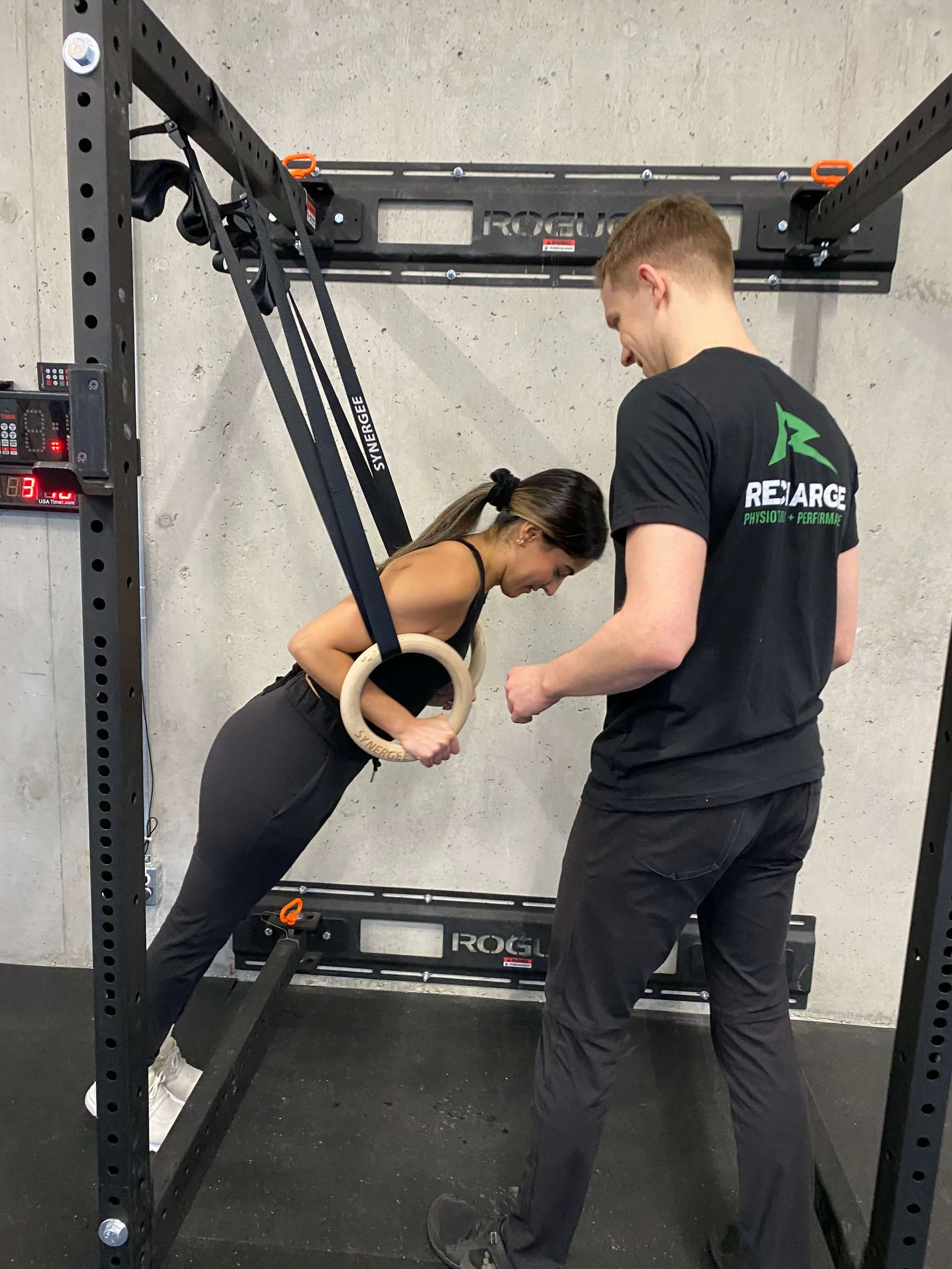
Rule #5: Progress Gradually
Progressing your rehab too quickly can get you into trouble.
Depending on your goals, a suggested progression may look like:
Return to full range
Return to full load
Return to full speed
Return to full training or sport
If your symptoms spike and last longer than 24 hours after exercise, it’s a sign you may need to scale things back.
A common mistake: people stopping their rehab once pain stops, before they’ve regained all of their pre-injury function. As a result, they often end up getting re-injured and end up seeing us more than they would have if they had completed their first round of rehab.
Think of it like taking antibiotics - you finish all the medication, even after you feel better.
Common Mistakes When Training While Injured
Avoid these if you want to recover efficiently:
Pushing through sharp or worsening pain
Returning to full intensity too soon
Not adapting loading or movement
Following random or generic rehab exercises
Avoiding movement altogether
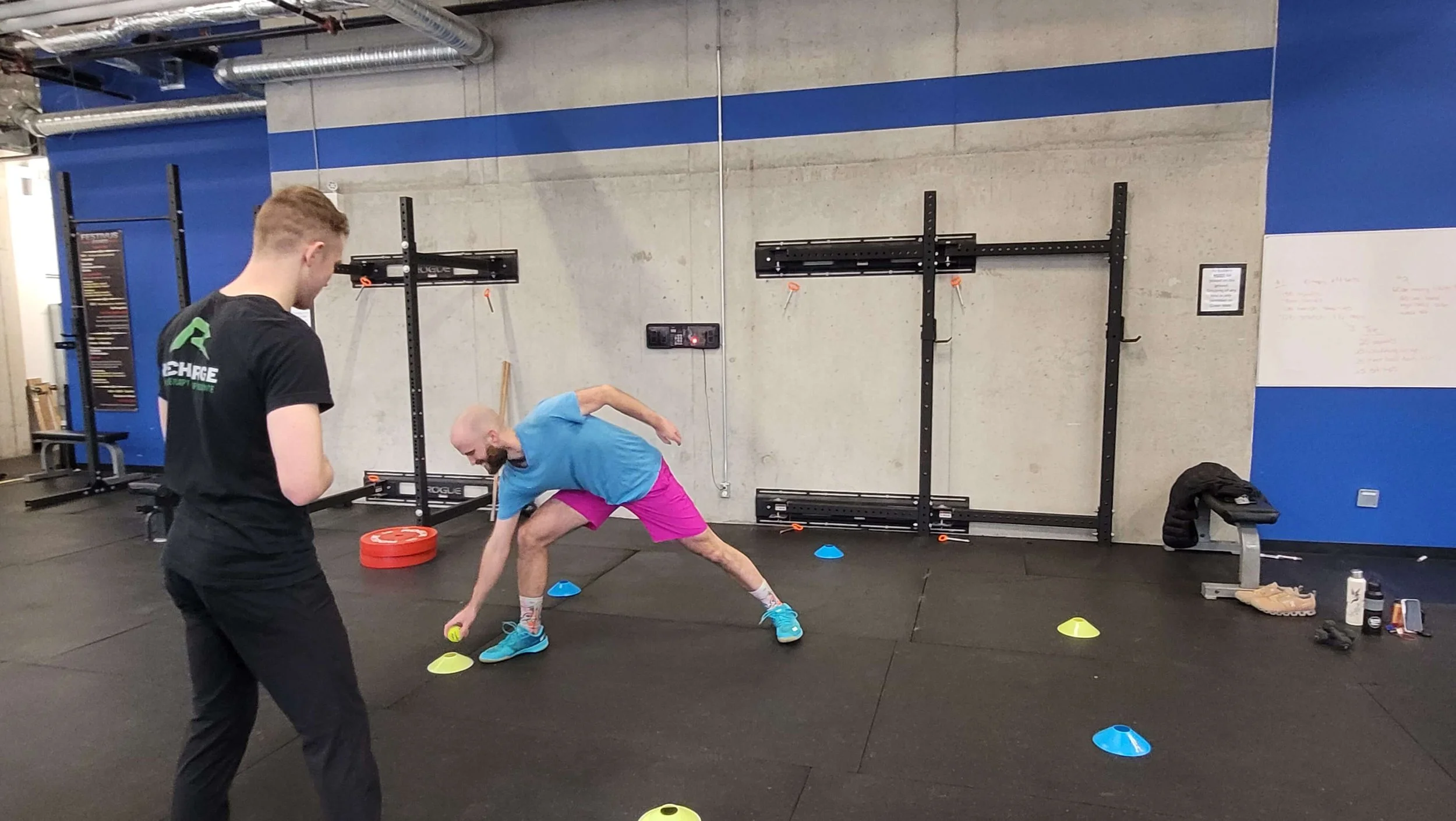
Train Smarter, Recover Faster
You don’t have to choose between training and recovery.
With the right strategy, you can stay active, maintain progress, and actually improve your long-term performance while recovering from an injury.
Frequently Asked Questions
Can I exercise while injured?
In many cases, yes. With proper modifications, you can continue training safely without worsening your injury.
Will exercise slow down my recovery?
No—when done correctly, exercise can actually speed up recovery by improving strength, mobility, and maintaining metabolic health.
What exercises should I avoid?
Avoid movements that cause sharp pain, significantly increase symptoms, or stress the injured area too early.
How do I know if I’m doing too much?
If your pain increases significantly during exercise or lingers for more than 24 hours after, you may need to reduce intensity or volume.
Book a Physiotherapy or Athletic Therapy Assessment in Victoria
If you’re trying to stay active while recovering from an injury, having a clear plan makes all the difference.
At Recharge Physiotherapy, we specialize in helping people train safely through injuries with personalized, performance-based rehab.
Book your assessment today and get a plan that keeps you moving forward!
Still Not Sure? We’re Here to Help
Give us a call at 250-885-8405 or schedule an appointment and we’ll help you find the right direction for your recovery!