
Spondylosis, Spondylolysis & Spondylolisthesis: What They Mean for Your Back
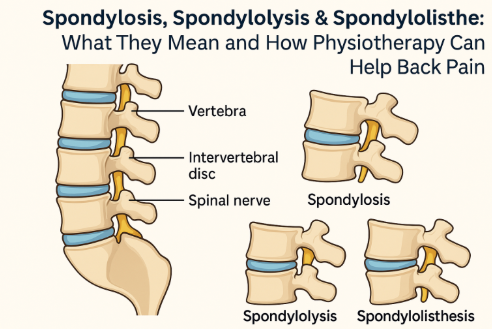
If you’ve ever experienced low back pain or stiffness, you’ve likely come across complex terms like spondylosis, spondylolysis, and spondylolisthesis—whether through a quick Google search or from a healthcare professional.
While these medical terms may sound intimidating, understanding them is key to effective management and recovery.
Whether you're an athlete, a weekend warrior, or someone who simply enjoys staying active, knowing how to address these issues—and when to seek physiotherapy—can help alleviate symptoms and get you back to doing what you love. In this article, we’ll break down these diagnoses, offer reassurance, and explain how you can return to your favourite activities with confidence.
What Is the Spine?
The spine (with the prefix “spondy-”, derived from Greek meaning spine) is a column of bones that runs from the neck to the lower back. It consists of 33 small bones called vertebrae, stacked on top of each other.
The spine has three main sections:
Cervical Spine (Neck)
Supports the head and allows for rotation and nodding movements.
Thoracic Spine (Mid-Back)
Connects to the ribs and provides stability to the upper body.
Lumbar Spine (Lower Back)
Carries much of the body’s weight and allows bending, lifting, and twisting.
Between each vertebra are soft, cushion-like discs that absorb shock and allow movement. The spine supports the body, protects the spinal cord (which sends signals between the brain and body), and enables us to move freely.
What Do These Terms Mean?
Spondylosis (Degenerative Changes)
Spondylosis is an age-related condition often referred to as spinal arthritis. It involves the gradual breakdown of cartilage, discs, and bones in the spine. Over time, this can lead to stiffness, reduced mobility, and sometimes nerve irritation.
Common Symptoms:
Back or neck pain
Morning stiffness
Reduced movement in the spine
Occasional nerve pain or tingling in the arms or legs
Important note: Many people have degenerative changes on imaging without significant pain. Findings on a scan do not always equal symptoms.
Spondylolysis (Stress Fracture)
Spondylolysis (suffix “-lysis” meaning “break”) is a small stress fracture in a vertebra, usually in the lower back.
It’s most common in young athletes, particularly in sports involving repetitive spinal extension (arching backward), such as gymnastics, football, diving, or tennis.
Common Symptoms:
Localised lower back pain
Pain that worsens with activity
Increased discomfort with back bending
Spondylolisthesis (Vertebral Slippage)
Spondylolisthesis (suffix “-listhesis” meaning “slip”) occurs when one vertebra slips forward over the one below it. This may result from untreated spondylolysis or degenerative changes over time.
Common Symptoms:
Lower back pain
Numbness, tingling, or weakness in the legs (from nerve compression)
Pain that worsens with prolonged standing or walking
Self-Management Strategies
If you’re experiencing symptoms, the first step is often temporary activity modification.
For example:
If pain occurs during overhead tennis serves, you may need to pause competitive matches and overhead serving temporarily.
If symptoms are triggered by heavy lifting, reducing load and volume may help.
However, complete rest is not recommended.
Instead, focus on:
Maintaining general strength
Continuing cardiovascular exercise
Keeping the spine moving within a comfortable range
As symptoms improve, gradually reintroduce the triggering movement. Start with lower intensity, fewer repetitions, and controlled exposure before progressing back to full activity.
The goal isn’t to avoid movement forever - it’s to rebuild tolerance safely and progressively.
When Should You See a Physiotherapist?
Consider seeking physiotherapy if:
Pain persists beyond a few weeks
Your activity levels are significantly limited
You experience repeated flare-ups
You notice nerve-related symptoms (numbness, tingling, weakness)
Early guidance can help prevent small issues from becoming chronic problems.
How Can Physiotherapy Help?
A physiotherapist plays a key role in both diagnosis and recovery.
Comprehensive Assessment
Your physiotherapist will assess:
Symptom severity
Range of motion
Strength and endurance of spinal support muscles
Movement patterns contributing to irritation
This thorough evaluation guides a personalized treatment plan tailored to your goals and lifestyle.
Education & Empowerment
Understanding your diagnosis reduces fear and uncertainty. Education helps you:
Make informed decisions about activity
Improve posture and movement strategies
Build confidence in returning to sport or exercise
Targeted Rehabilitation
Treatment may include:
Strengthening exercises for spinal support
Core stability training
Mobility work
Gradual return-to-sport programming
The ultimate goal is not just short-term pain relief—but building a stronger, more resilient spine for the long term.
Conclusion
Although terms like spondylosis, spondylolysis, and spondylolisthesis may sound complex, they are manageable conditions with the right approach.
With early intervention, guided rehabilitation, and progressive return to activity, most people can continue living active, fulfilling lives.
Don’t let back pain hold you back—book a physiotherapy assessment today and take the first step toward confident, supported recovery.
References
Spine Anatomy & Function
TeachMeAnatomy. (n.d.). Vertebral Column – Structure & Function.
Kenhub. (n.d.). Spinal Column Overview.
Spondylosis (Degenerative Changes)
Mayo Clinic. (2023). Spondylosis (Spinal Osteoarthritis).
Spine-Health. (2023). Cervical and Lumbar Spondylosis.
Spondylolysis (Stress Fracture)
Radiopaedia. (n.d.). Spondylolysis – Causes & Diagnosis.
National Institute of Arthritis and Musculoskeletal and Skin Diseases (NIAMS). (2023). Spondylolysis in Young Athletes.
Spondylolisthesis (Vertebral Slippage)
Cleveland Clinic. (2023). Spondylolisthesis – Symptoms, Diagnosis & Treatment.
American Academy of Orthopaedic Surgeons (AAOS). (2023). Spondylolisthesis: A Common Cause of Back Pain.
Physiotherapy & Rehabilitation
Chartered Society of Physiotherapy (CSP). (2023). Managing Back Pain with Physiotherapy.
Spine-Health. (2023). Exercise and Rehabilitation for Spondylolysis & Spondylolisthesis.