
Tennis Elbow Treatment in Victoria, BC
Elbow Pain Relief & Rehab
Are you struggling with pain on the outside of your elbow when lifting, gripping, or working? You might be dealing with tennis elbow, also known as lateral epicondylitis or lateral epicondylopathy. At Recharge Physiotherapy + Performance, our experienced physiotherapists help many individuals recover quickly, safely, and for the long term.
What Is Tennis Elbow?
Tennis elbow is a condition typically caused by overuse and repetitive strain of the tendons on the outside of the elbow. These tendons are responsible for wrist and hand movements, especially gripping and lifting. When overloaded, they become irritated, inflamed, or can even change structure over time.
Living in Victoria often means an active lifestyle—whether it’s playing tennis at Oak Bay Rec, paddling in the Gorge, or doing landscaping in your backyard. We often see clients whose tennis elbow developed from:
Weekend pickleball matches at Cedar Hill
Strength training at local gyms
Desk workers and computer users
Gardening and yard work
Massage therapists and tradespeople with high hand demand
Common Symptoms of Tennis Elbow
Many clients often report:
Pain or burning on the outside of the elbow
An ache that radiates into the forearm
Grip weakness, especially when lifting or twisting
Increased pain during tasks like turning doorknobs, pouring coffee,or using a computer mouse
These symptoms typical start gradually and worsen over time if unaddressed. Managing this issue early can often help speed up the recovery time.
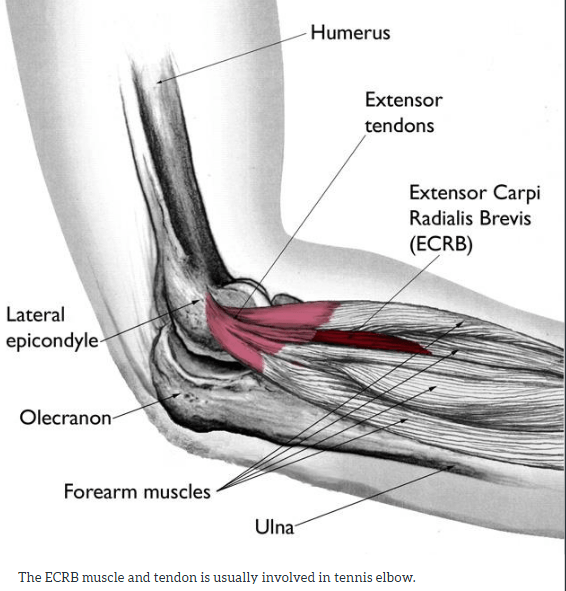
Reproduced and modified from The Body Almanac. © American Academy of Orthopaedic Surgeons, 2003.
How Physiotherapy Can Help Tennis Elbow
At Recharge Physiotherapy + Performance, our team delivers individualised treatment plans based on a detailed assessment. Here’s how physiotherapy can help you overcome tennis elbow:
Thorough Assessment
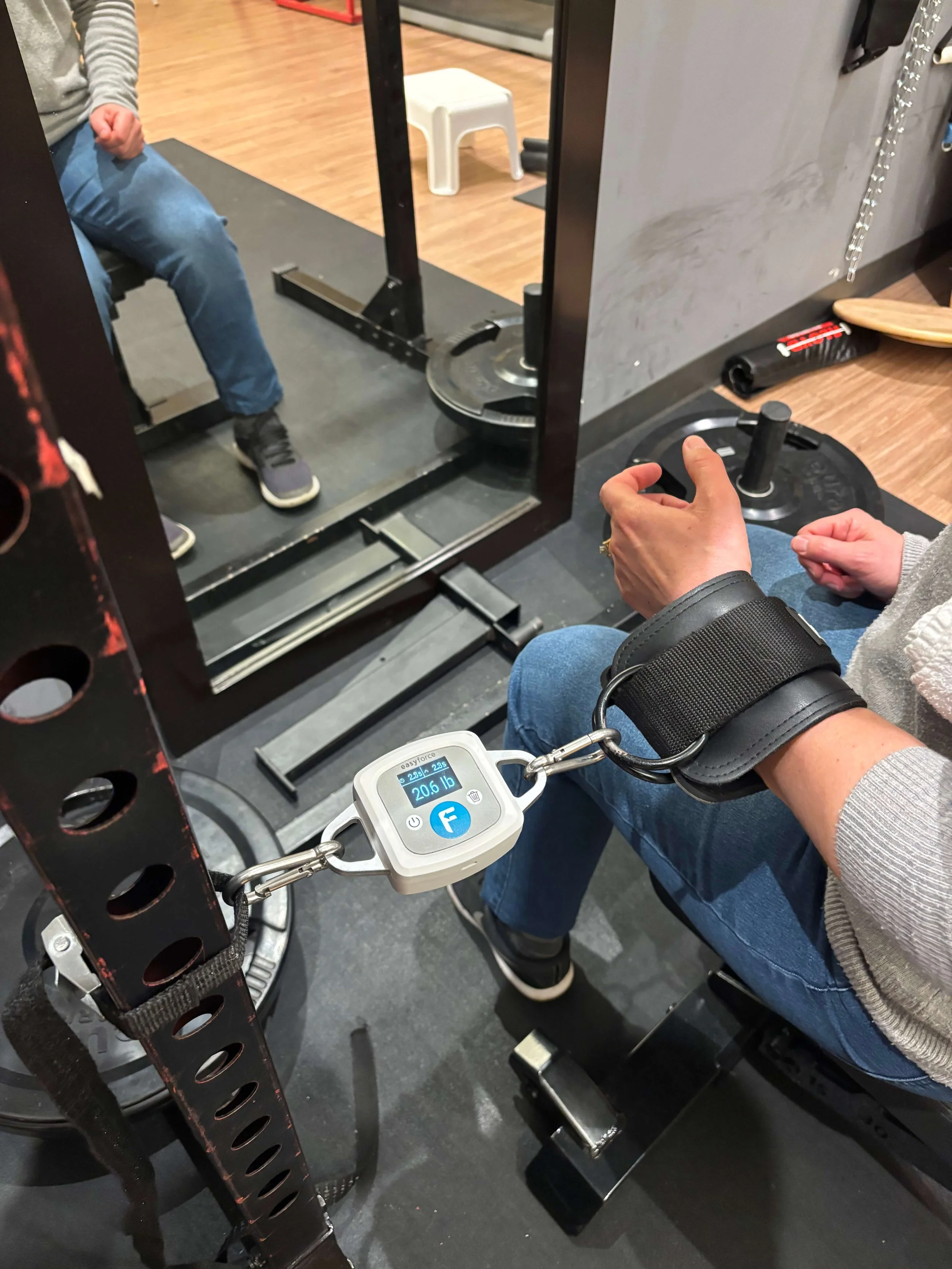
First, your physiotherapist will begin with a comprehensive physical exam and movement analysis to confirm the diagnosis and rule out other causes of elbow or forearm pain. They will also look at your:
Range of motion
Objective strength
Work, sport, and daily habits
Understanding the diagnosis allows you to get the treatment best suited to your needs.
Hands-On Treatment
Physiotherapists may use manual techniques to reduce pain and restore mobility. This may include:
Joint mobilization of the elbow and wrist
Soft tissue therapy
Targeted Exercise Rehabilitation
Exercise is the most evidence-based treatment for tennis elbow. This can be incorporated into your recovery by working with your physiotherapist to design a program specifically for you, which may include:
Isometric or eccentric loading to reduce pain
Wrist extensor or flexor strengthening
Grip strength exercises
Sport- or job-specific drills
All exercises are progressed based on your healing stage and goals.
Pain Relief Modalities
For more persistent cases, additional therapies may be used to help treat this condition. Some of these modalities may include:
Taping or Bracing: Can help offload the area during healing
Dry Needling: Targets the muscles and tendons in the forearm more directly
Shockwave Therapy: Can be helpful for conditions that stop progressing
Education & Ergonomic Coaching
During your appointment, you can also expect to be provided with expert advice on how to modify work and lifestyle habits to manage the symptoms. This may include:
Computer workstation alterations
Grip technique advice (tools, weights, racquets)
Rest and pacing strategies
Warm-up and cooldown protocols
How Long Does Tennis Elbow Take to Heal?
Recovery depends on several factors:
Severity and duration of symptoms
Your activity level and job demands
Adherence to the rehab program
Most clients see improvements in 6–12 weeks with consistent physiotherapy. Chronic cases may take longer, but with expert guidance, even long-standing issues respond well to care.
Get Back to Doing What You Love
Tennis elbow can affect your quality of life, whether you're at work, at the gym, or on the court. Don’t wait for it to get worse—early intervention is key.
Still Not Sure? We’re Here to Help
Give us a call at 250-885-8405 or schedule an appointment and we’ll help you find the right direction for your recovery!