
How to Use a Treadmill for Training: Complete Guide for Runners
Learn how to train effectively on a treadmill with pace charts, structured workouts, and expert tips. A complete guide for runners in Victoria.
In Victoria, where weather and daylight hours can sometimes limit outdoor training, a treadmill can provide a consistent and controlled environment to stay on track. Whether you're training for a 5K, a half marathon, or simply want to stay active, learning how to use a treadmill effectively can make a big difference in your results.
Why Use a Treadmill for Training?
Treadmills are more than a convenient backup plan—they’re a consistent and controlled environment for performance-driven workouts.
Benefits of treadmill training:
Controlled pace and incline – Ideal for speed and hill training without external variables.
Weather-proof – Run any time, regardless of rain, snow, or scorching sun.
Built-in metrics – Track heart rate, speed, incline, calories, and distance.
Safer environment – Reduced risk of trips, poor lighting, or uneven terrain which can be especially helpful when rehabbing an injury.
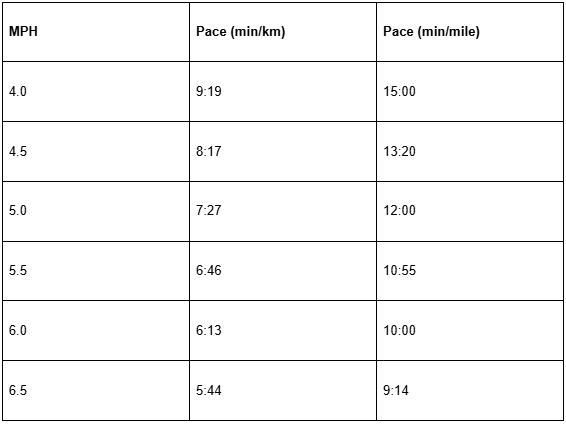
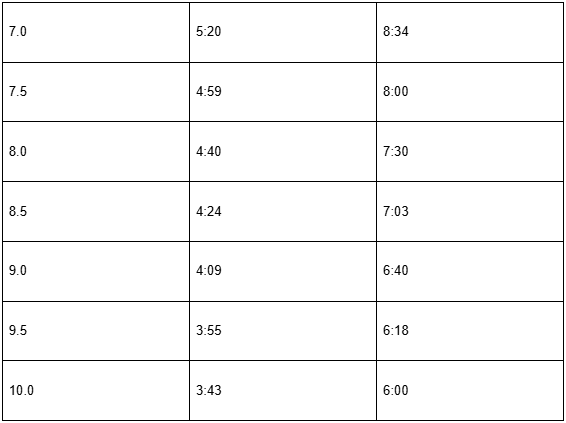
Treadmill Pace Conversion Chart (MPH to KM)
Many treadmills show speed in miles per hour (MPH), but most running plans use minutes per kilometre. Use this chart to quickly convert:
Sample Treadmill Workouts for Runners
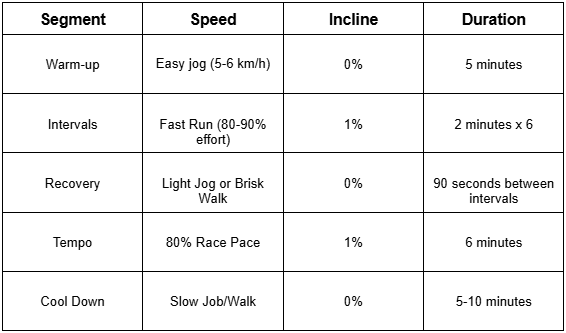
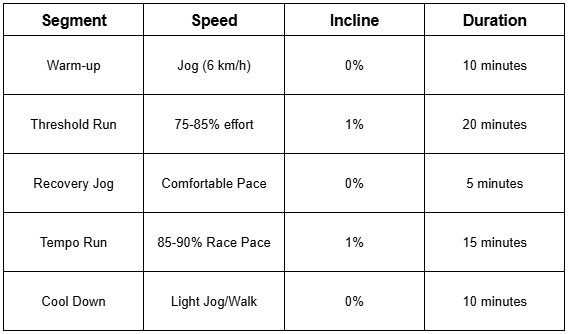
Here are two examples of structured treadmill workouts based on race distances. Note that these are guidelines and should be modified based on your current fitness and rehab needs.
5K Treadmill Workout (Intermediate):
Goal: Improve pace and build stamina for race day
Duration: ~30–40 minutes
Half Marathon Treadmill Workout (Advanced):
Goal: Build endurance and threshold
Duration: 60–75 minutes
Advantages of Treadmill Training
Pace Accuracy: Easy to lock into exact speeds for interval or tempo runs.
Customization: Adjust incline and speed in real-time for specific workouts.
Reduced Impact: Softer surface than asphalt or concrete, and running on an incline can further decrease impact.
Privacy: Train in comfort without onlookers or crowded paths.
Disadvantages of Treadmill Training
Monotony: Can feel repetitive or mentally draining.
Less Wind Resistance: Running outdoors on race day may feel tougher due to wind and terrain.
Limited Lateral Movement: Doesn’t simulate trail or road turns.
Limited Variance: Less adaptability to real-world race conditions for incline/decline.
Treadmill Running Tips for Better Performance
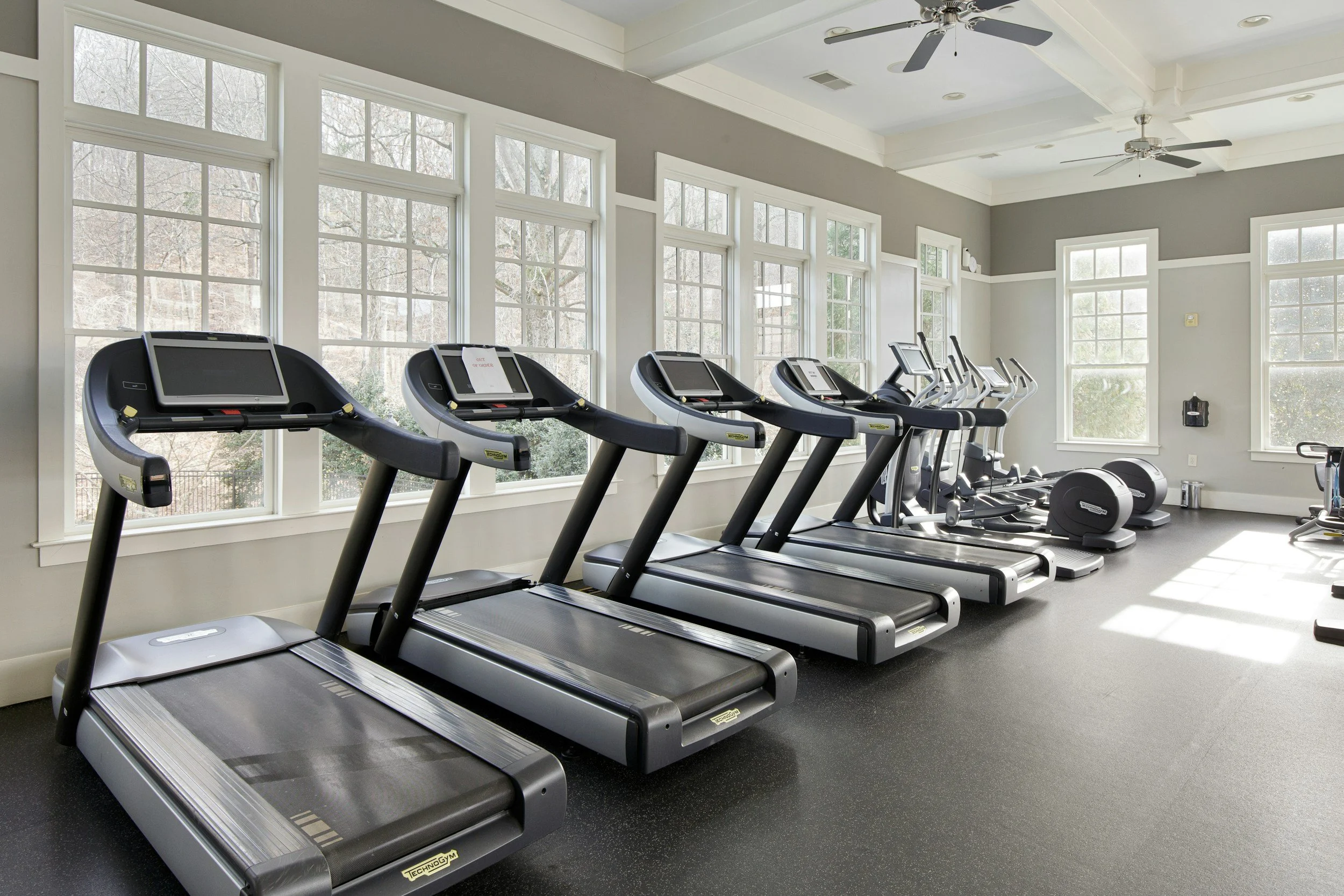
Use a 1% incline to simulate outdoor running resistance.
Stay upright with relaxed arms and a slight lean forward.
Avoid holding the handrails – this can reduce workout effectiveness and compromise form.
Mix it up with speed intervals, hill repeats, or progression runs to avoid plateauing.
Final Thoughts: Should You Train on a Treadmill?
If you're training for a race, recovering from injury, or just want a consistent workout environment, the treadmill is an excellent choice. With proper planning and smart workout design, it can significantly boost your speed, endurance, and confidence.Whether you’re a beginner or a seasoned runner, using a treadmill effectively means training smarter—not just harder.
Book a running assessment with us at Recharge Physiotherapy + Performance to get a personalized treadmill training and injury-prevention plan.
Still Not Sure? We’re Here to Help
Give us a call at 250-885-8405 or schedule an appointment and we’ll help you find the right direction for your recovery!