
Back pain is incredibly common and can affect almost anyone. It can show up after lifting something heavy, spending too much time sitting, increasing your activity, or sometimes seemingly for no obvious reason at all.
I even have a friend who claims to go to bed injury-free and wake up injured regularly.
While back pain can be frustrating and sometimes scary, most cases respond well to appropriate movement, exercise, education, and treatment. Understanding what may be contributing to your symptoms is a great first step toward getting back to the activities you enjoy.
Common Types of Back Pain
Muscle Strains
A back muscle strain can happen when a muscle is overloaded or stretched beyond what it is currently prepared to handle. This can occur after lifting, exercising, twisting, doing more activity than usual, or being less prepared (think lack of sleep, stress etc.).
Symptoms may include localized pain, stiffness, muscle soreness, or discomfort when bending, twisting, or moving.
Disc-Related Back Pain
The discs between the bones of your spine help absorb forces and allow your spine to move. Changes or irritation involving a spinal disc can sometimes contribute to back pain.
Disc-related symptoms can vary significantly from person to person and may include back pain, stiffness, or pain that travels into the buttock or leg.
It’s worth noting that while disc changes are very common with imaging, a large majority of people who have those changes report no pain. Disc changes being the cause of injury is less common than most people would think.
Facet Joint Pain
Facet joints are small joints located at the back of your spine that help guide and control spinal movement. Irritation of these joints can contribute to localized back pain and stiffness.
Symptoms may be aggravated by certain movements or prolonged positions, particularly movements involving extension or rotation of the spine.
Sacroiliac Joint Pain
The sacroiliac joints connect the base of your spine to your pelvis. Irritation in this area can cause pain around the lower back, buttock, or hip region.
Sacroiliac joint symptoms can sometimes become more noticeable with activities such as walking, running, standing, single-leg activities or changing positions.
Chronic or Persistent Back Pain
Sometimes back pain lasts longer than expected or keeps returning. Persistent back pain can be influenced by many different factors, including physical activity, sleep, stress, previous injuries, work demands, and overall physical capacity.
The longer people have pain, the less likely it is that the tissues need to heal, and the more likely that something else is going on in the body that drives the pain.
This does not mean there is necessarily something seriously wrong with your back. With the right approach, people can often improve their strength, confidence, and ability to manage their symptoms.
When Should You See a Physiotherapist?
You do not necessarily need to stop moving completely when you have back pain. In fact, we generally suggest gradually returning to appropriate movement and activity right away, typically without any need of imaging.
It may be worth speaking with a physiotherapist if your back pain is:
Lasting longer than expected
Getting worse rather than better
Limiting your ability to work, exercise, or participate in daily activities
Making bending, lifting, walking, or sitting difficult
Preventing you from doing activities you enjoy
Repeatedly returning after activity
If you have any of these symptoms, or pain is severe, you should be seeing a medical professional:
Causing pain, tingling, or other symptoms into your leg or groin
It wakes you up at night
Pain doesn’t change no matter what position you’re in
A physiotherapist can assess your symptoms, identify factors that may be contributing to your pain, and develop a treatment plan based on your specific goals.
How Physiotherapy Can Help Back Pain
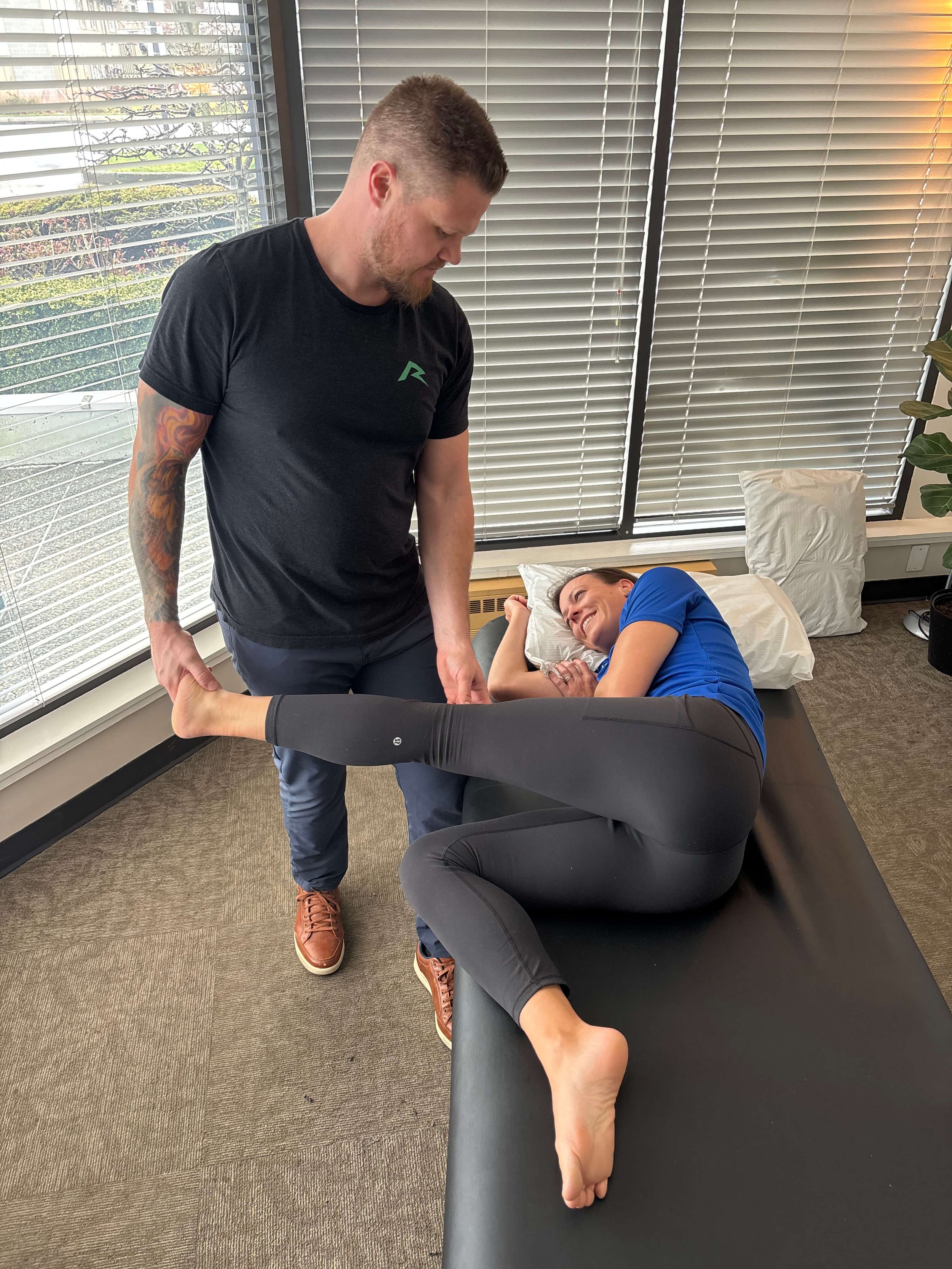
Treatment will depend on the cause and presentation of your back pain, but may include targeted strengthening, mobility exercises, movement retraining, education, and manual therapy when appropriate.
We want to help you understand your symptoms, improve your physical capacity, and build confidence in your ability to move.
Whether your goal is getting back to the gym, returning to running, being able to pick up your kids, or simply getting through your workday more comfortably, your treatment should be built around what matters to you.
Dealing With Back Pain in Victoria?
If back pain is keeping you from working, exercising, playing sports, or enjoying your everyday life, you do not have to figure it out on your own.
At Recharge Physiotherapy in Victoria, BC, our physiotherapists regularly work with people experiencing all types of back pain. We can help you understand what may be contributing to your symptoms and create a plan to help you move forward.
Ready to take the next step? Contact Recharge Physiotherapy to book an assessment or reach out to our team with any questions about your back pain. We would be happy to help you figure out where to start.
Your back pain should not get to decide what you can and cannot do. Let's get you moving again.
