
Common Types of Shoulder Pain: What Could Be Causing Your Symptoms?
Shoulder pain can make everyday activities surprisingly difficult. Reaching overhead, putting on a jacket, sleeping comfortably, working out, or even reaching for something on a shelf can become uncomfortable when your shoulder is not moving the way it should.
Shoulder pain can develop gradually from repetitive activity or increased exercise, or it can happen suddenly following an injury. The good news is that many shoulder conditions respond well to movement, hands on treatment, and the right approach to gradually returning to activity.
Understanding what may be contributing to your shoulder pain is the first step toward getting back to doing the things you enjoy.
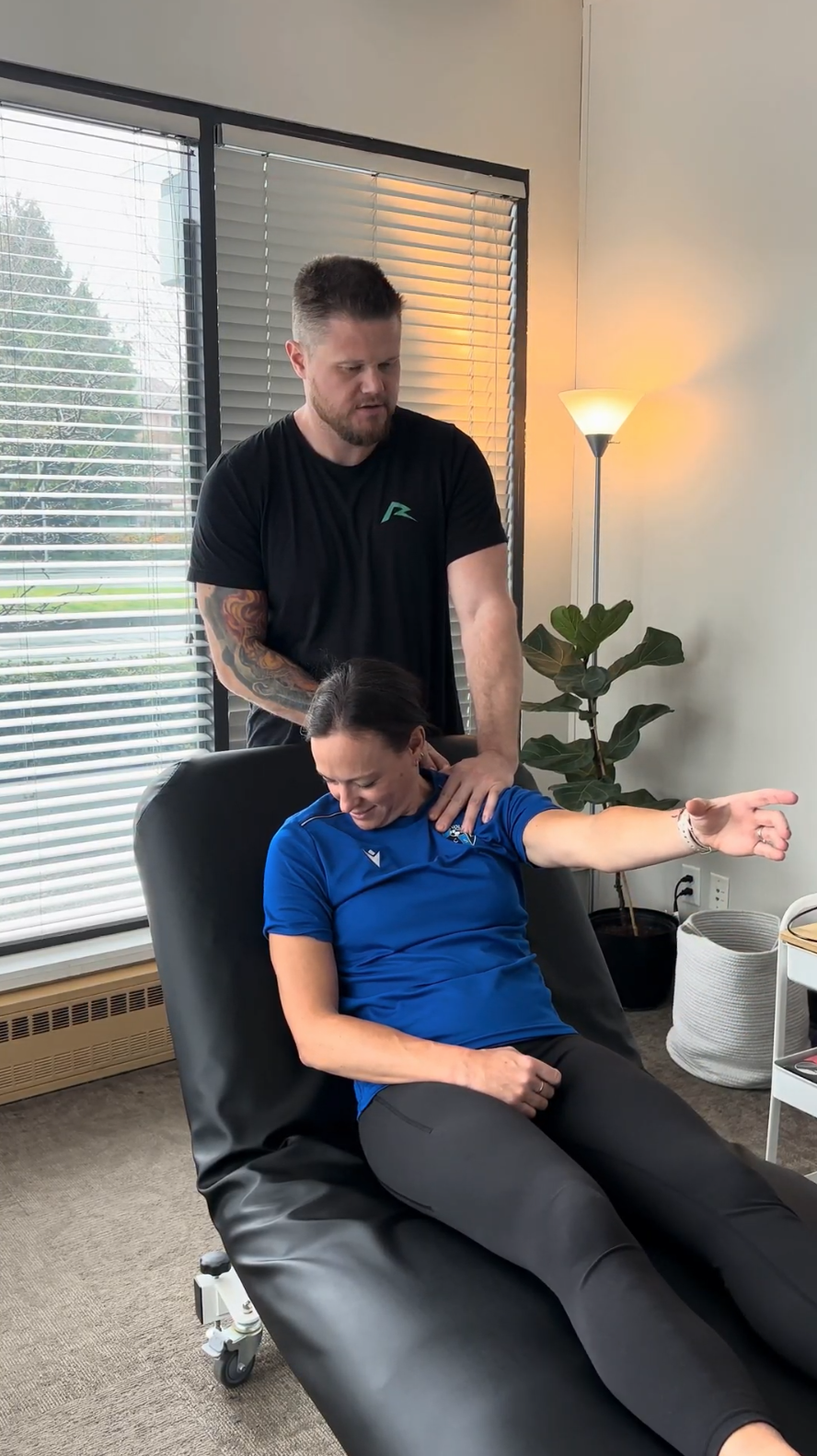
Common Types of Shoulder Pain
Rotator Cuff Tendinopathy
The rotator cuff is a group of muscles and tendons that help control and stabilize your shoulder. When these tissues become irritated or overloaded, they can contribute to shoulder pain.
Pain is often noticed when lifting the arm, reaching overhead, putting on clothing, or lying on the affected side. Rotator cuff pain can develop gradually, particularly after an increase in exercise, sports, or repetitive activity.
Frozen Shoulder
Frozen shoulder (adhesive capsulitis) can cause significant pain and stiffness in the shoulder.
People may notice difficulty reaching overhead, putting on a shirt or jacket, reaching behind their back, or sleeping comfortably. Pain is usually the first thing people notice, but shoulder movement can become increasingly restricted over time.
Physiotherapy and chiropractic can help you understand what is happening and work on maintaining and gradually improving your shoulder's mobility and function.
Shoulder Instability
Shoulder instability can occur when the structures responsible for keeping the shoulder joint stable are unable to adequately control its movement.
Some people may experience a feeling that their shoulder is loose, slipping, or going to come out of place. Instability can sometimes develop following an injury or dislocation, but it can also occur in people who participate in activities involving frequent overhead movement or have hypermobility conditions.
Physiotherapy and chiropractic usually focus on improving strength, coordination, and confidence in the shoulder.
Rotator Cuff Tears/Strains
A sudden injury, fall, heavy lift, or sporting incident can damage muscles within the shoulder, including the rotator cuff.
Symptoms can include pain, weakness, reduced range of motion, or difficulty using the arm. Not every shoulder tear requires surgery, and physio and chiro can be an important part of both conservative treatment and recovery following surgery.
Muscles are less like ropes and more like t-shirts. A tear in a t-shirt doesn’t mean the shirt suddenly becomes a crop top - it can just be a small patch. Lots to unpack in this one (like many people have “tears” and don’t even know), so it’s best to speak to your clinician or doctor.
When Should You See a Physiotherapist or Chiropractor?
Not every episode of shoulder pain requires immediate treatment. However, if your symptoms are sticking around, getting worse, or stopping you from doing the things you normally enjoy, it may be time to get assessed.
It may be worth speaking with a clinician if your shoulder pain is:
Lasting longer than expected
Getting worse rather than better
Limiting your ability to work, exercise, or play sports
Making reaching overhead or behind your back difficult
Affecting your sleep
Associated with weakness or reduced shoulder movement
Returning repeatedly after certain activities
Preventing you from doing activities you enjoy
A physiotherapist or chiropractor can assess your shoulder, identify factors that may be contributing to your symptoms, and develop a treatment plan based on your goals.
How Physio or Chiro Can Help Shoulder Pain
Treatment will depend on the cause of your shoulder pain, but may include targeted strengthening, mobility exercises, movement retraining, education, and manual therapy when appropriate.
The goal is not simply to make your shoulder feel better for a few days. We want to help you understand your symptoms, improve your shoulder's capacity, and gradually return to the activities that matter to you.
Whether your goal is getting back to the gym, returning to your favourite sport, sleeping comfortably, or simply being able to reach overhead without pain, your treatment should be built around what matters to you.
Dealing With Shoulder Pain in Victoria?
If shoulder pain is keeping you from working, exercising, playing sports, or enjoying your everyday life, you do not have to figure it out on your own.
At Recharge Physiotherapy in Victoria, BC, our physiotherapists and chiropractors work with a wide range of shoulder injuries and pain conditions. We can help you understand what may be contributing to your symptoms and create a plan to help you move forward.
Ready to take the next step? Contact Recharge Physiotherapy to book an assessment or reach out to our team with any questions about your shoulder pain. We would be happy to help you figure out where to start.
Your shoulder pain should not get to decide what you can and cannot do. Let's get you moving again.
