
Physiotherapy: What People Don’t Know
When most people think of physiotherapy, they think of recovering from an injury — maybe a sprained ankle, a sore back, or rehab after surgery.
But physiotherapy is about much more than treating an injury after it happens.
Physiotherapists are movement experts. They assess how your body moves, identify what may be contributing to pain or limitations, and help you build the strength, mobility, and confidence needed to get back to the activities that matter to you.
Whether you're dealing with a new injury, something that keeps coming back, recovering from surgery, or simply aren't moving the way you'd like to, physiotherapy can be a great place to start.
Physiotherapists Treat a Wide Range of Conditions, Not Just Injuries
Physiotherapists work with conditions affecting your muscles, bones, joints, nerves, and overall movement.
That can include common injuries like ankle sprains and muscle strains, but also conditions such as osteoarthritis, ankylosing spondylitis, spinal stenosis, Ehlers-Danlos syndrome (EDS), sarcopenia, and a variety of other conditions.
The important part is that treatment isn't based only on the name of your injury. Your physiotherapist looks at how that injury or condition is affecting you — your movement, your strength, your daily life, and the activities you want to return to.
You Don't Have to Have Trauma to See a Physiotherapist
You also don't need to wait for a major injury before booking an assessment.
Sometimes the first sign that something needs attention isn't a fall or crash. Maybe your shoulder has gradually become stiffer. Maybe your knee keeps getting irritated whenever you increase your hiking distance. Maybe you've noticed that one side feels weaker than the other.
Physiotherapy can help identify what's limiting you and give you a plan for addressing it.
You might consider seeing a physiotherapist if you:
Have pain or stiffness that keeps returning
Notice changes in your strength, balance, or mobility
Are preparing for or recovering from surgery
Aren't sure how to safely progress your activity
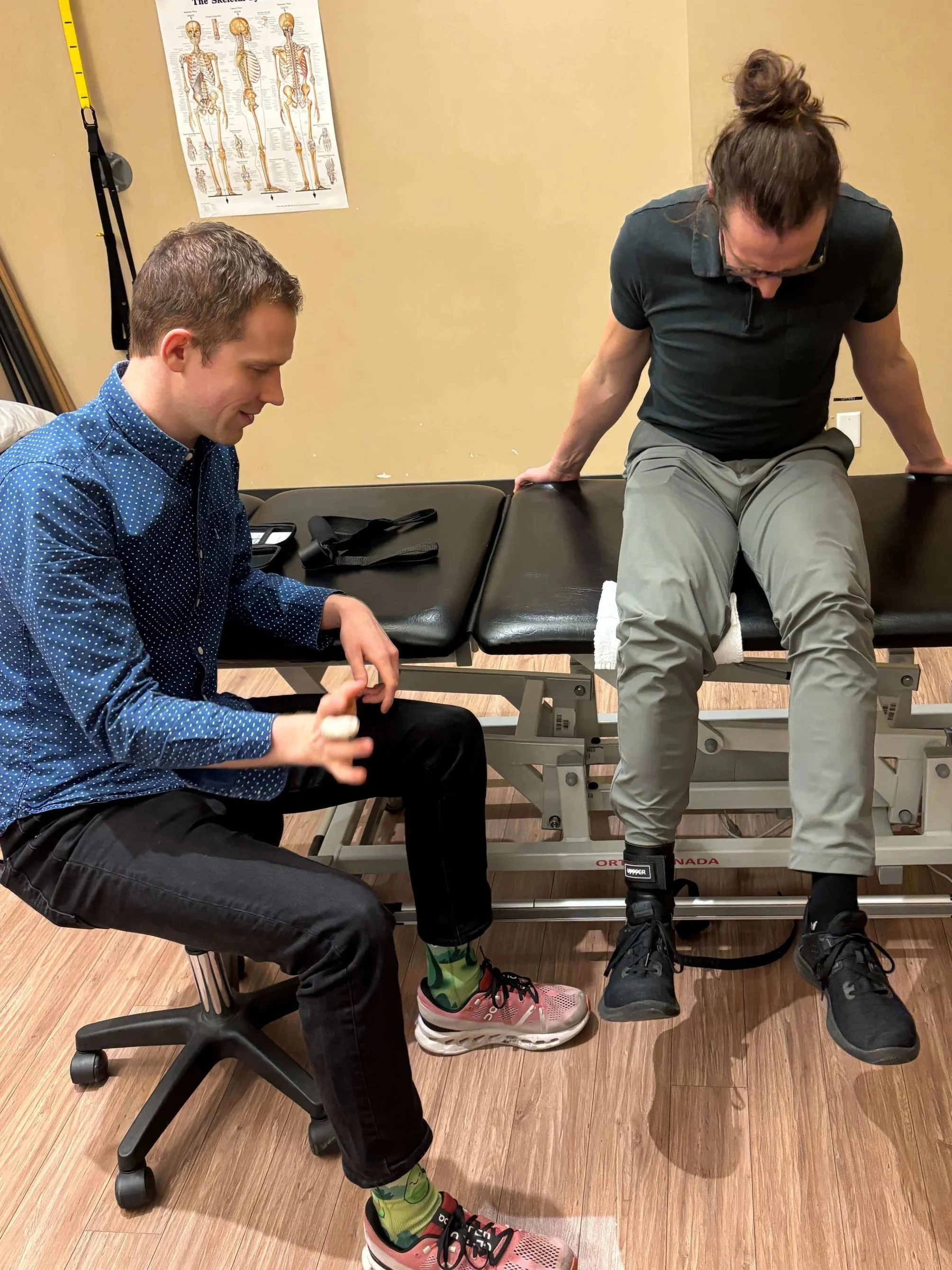
You Don't Need to Wait for a Referral
Physiotherapists are first-contact healthcare providers, meaning you can book an appointment directly without seeing a physician first.
This can be especially helpful when something starts hurting, and you're not quite sure what's going on.
Maybe your knee has started bothering you every time you run. Maybe you just left the hospital and are deconditioned. Or maybe you've had Ehlers-Danlos syndrome your entire life.
You don't need to know exactly what's wrong before booking physiotherapy. That's what the assessment is for.
Your physiotherapist can listen to what's been happening, assess your movement and strength, determine whether physiotherapy is appropriate, and develop a treatment plan based on what they find.
If you're using extended health benefits, it's always worth checking your individual insurance plan, as some plans may require a physician referral for reimbursement. Worth noting that the only one we’ve seen is UVic health insurance.
Physiotherapy Doesn't End When the Pain Goes Away
Feeling better and being fully recovered aren't always the same thing.
Imagine you've sprained your ankle. A few weeks later, walking doesn't hurt anymore. That's great — but if your goal is to get back to running, hiking, or playing soccer, your ankle needs to tolerate much more than walking around the house.
That's where rehabilitation comes in.
Physiotherapy can progressively rebuild things like strength, mobility, balance, coordination, and your tolerance to activity so your body is prepared for what you're asking it to do.
The same idea applies after more significant injuries. Someone recovering from an ACL injury, for example, may eventually feel comfortable during everyday activities while still needing rehabilitation before their knee is prepared for running, jumping, changing direction, or returning to sport.
If every plan stopped at "it doesn't hurt anymore," not everyone would get back to doing what matters to them.
When Should You See a Physiotherapist?
You don't need to wait until pain becomes severe or an injury completely stops you from doing what you love.
If pain, stiffness, weakness, or a change in movement is affecting something you want or need to do, that's a good reason to have it assessed.
And rather than wait for a doctor’s appointment, you can start your care with a physiotherapist. It’s common for your local physio to be more available and have more time than physicians.
Physiotherapy can support you from the early stages of an injury, beyond pain improvements, all the way through returning to work, exercise, sport, and everyday life.
And if you have a chronic condition, physio can help give you an idea of what you’re capable of and where improvements can be made.
If you want help, or want to learn more give us a call at 250-885-8405 and we’ll be happy to get you sorted.
