
Chiropractic care often gets associated with one thing: back pain.
While back pain is certainly a common reason to see a chiropractor, chiropractors work with a much wider range of problems involving your joints, muscles, and overall movement.
From a stiff neck that makes checking your blind spot difficult to a shoulder that doesn't move comfortably overhead, chiropractic care can help assess what's limiting you and find a plan to get you moving again.
It's Not Just About Your Back
Chiropractors work with musculoskeletal conditions throughout the body, including the neck, shoulders, hips, knees, and other joints.
That can include problems that develop gradually, injuries that happen suddenly, or symptoms that have been hanging around for months.
For example, someone experiencing whiplash after a car accident may experience neck stiffness, pain, headaches, or reduced range of motion. Someone else may have a completely different concern, such as a sore shoulder or persistent lower-back pain.
The first step is figuring out what's going on and how it's affecting your ability to move and function.
Chiropractic Care Is More Than Adjustments
When you picture a chiropractic appointment, an adjustment may be the first thing that comes to mind.
But that's only one tool that may be used.
Depending on your assessment and goals, chiropractic care can include joint mobilization or manipulation, soft-tissue techniques, exercise, movement recommendations, and education.
For someone experiencing tendinitis, for example, addressing the problem may involve more than treating the painful area. Tendons connect muscles to bones and can become irritated when they're repeatedly overloaded. Understanding the activities contributing to your symptoms and gradually improving what the area can tolerate may also be important.
Your treatment should be based on what you need rather than receiving the exact same treatment at every appointment.
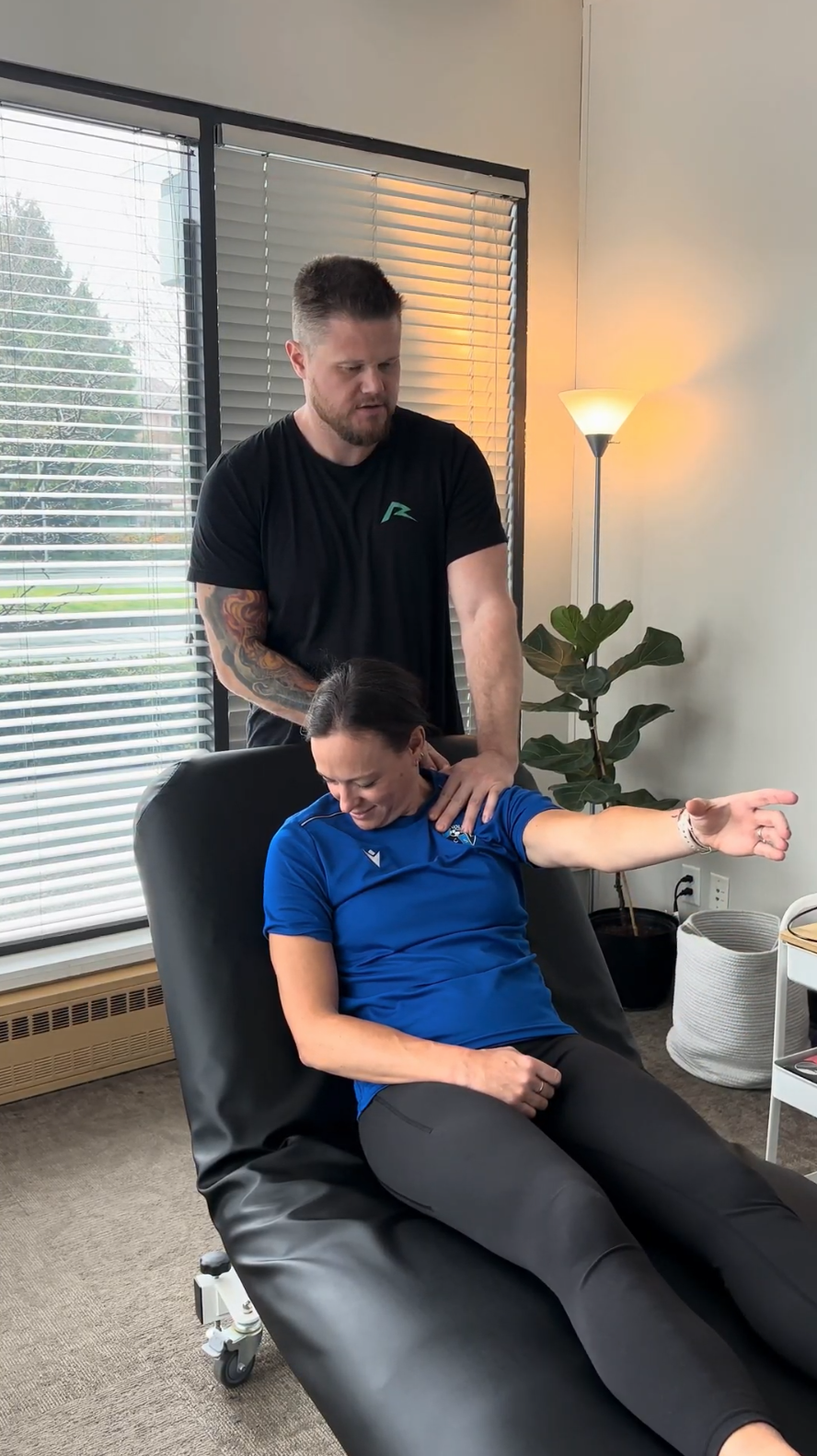
Everyday Life Can Put a Lot of Demand on Your Body
You don't need to have a dramatic injury for something to start bothering you.
Work, hobbies, exercise, and repetitive movements all place demands on your body. Sometimes symptoms develop gradually rather than from one specific event.
Repetitive strain injuries, for example, can affect areas such as the wrists, elbows, shoulders, and knees when the same movements are performed repeatedly.
That means the person sitting at a computer all week and the person training five days a week can both develop musculoskeletal problems — just for very different reasons.
What Can a Chiropractor Help With?
There are plenty of reasons someone might book a chiropractic assessment, including:
Back or neck pain
Muscle or joint discomfort
Stiffness or reduced mobility
Sprains and strains
Certain types of headaches
Sports or exercise-related injuries
Pain affecting work or everyday activities
Some conditions can also feel similar despite involving different structures. Shoulder pain, for example, might involve muscles, tendons, joints, or structures such as a bursa, a small fluid-filled sac that helps cushion tissues around a joint.
This is one reason an assessment matters - to make sure the correct things are being treated.
You Can Start With a Chiropractor
You don't need a physician referral before booking chiropractic care.
If something hurts, feels restricted, or is interfering with your ability to move normally, a chiropractor can assess the problem and determine whether chiropractic treatment is appropriate.
And if your assessment suggests you need another type of healthcare provider, your chiropractor can help point you in the right direction.
