
Knee pain is one of the most common reasons people seek physiotherapy. Whether it started after a workout, gradually developed over time, or appeared after an injury, knee pain can make everyday activities like walking, climbing stairs, running, or exercising much more difficult.
The good news is that many types of knee pain respond well to the right combination of exercise, education, and hands-on treatment. Understanding what may be causing your symptoms is the first step toward getting back to the activities you enjoy.
Common Types of Knee Pain
Patellar Tendonitis
Patellar tendonitis (or patellar tendinopathy), sometimes called jumper's knee, affects the tendon connecting your kneecap to your shinbone. It is particularly common in people who participate in jumping, running, or sports that involve frequent changes in direction.
Pain is often felt directly below the kneecap and may become worse with jumping, running, squatting, or climbing stairs.
Quadriceps Tendonitis
The quadriceps tendon connects the muscles at the front of your thigh to your kneecap. When this tendon becomes irritated, it can cause pain above the kneecap, known as quadricep tendonitis.
Quadriceps tendon pain may be aggravated by activities such as squatting, running, jumping, or repeatedly bending and straightening the knee.
Patellofemoral Pain
Patellofemoral pain (PFPS) is commonly felt around or behind the kneecap. It can develop when the tissues around the kneecap become irritated, often in response to changes in activity, training load, strength, or movement.
People may notice pain when going up or down stairs, squatting, running, or sitting for long periods with their knees bent.
Knee Osteoarthritis
Knee osteoarthritis involves changes to the joint that can occur over time. It may cause pain, stiffness, swelling, and reduced mobility.
These changes to joints are, in many ways, like gray hairs in that they’re common with age. Not everyone who has these changes experiences pain, and coming to a clinical diagnosis includes a combination of imaging with a particular set of signs and symptoms.
Although osteoarthritis cannot be "cured," physiotherapy and regular exercise can help improve pain, strength, movement, confidence, and your ability to stay active.
Meniscus Injuries
The meniscus is a piece of cartilage that helps cushion and stabilize the knee. A meniscus injury can occur from a sudden twisting movement or develop gradually over time.
Symptoms can include knee pain, swelling, stiffness, clicking, or difficulty fully bending or straightening the knee.
Knee Ligament Injuries
The knee has several important ligaments that help keep the joint stable. Injuries to the ACL, MCL, PCL, or LCL can occur during sports, falls, or sudden changes in direction.
Depending on the injury, people may experience pain, swelling, instability, or difficulty putting weight through the leg.
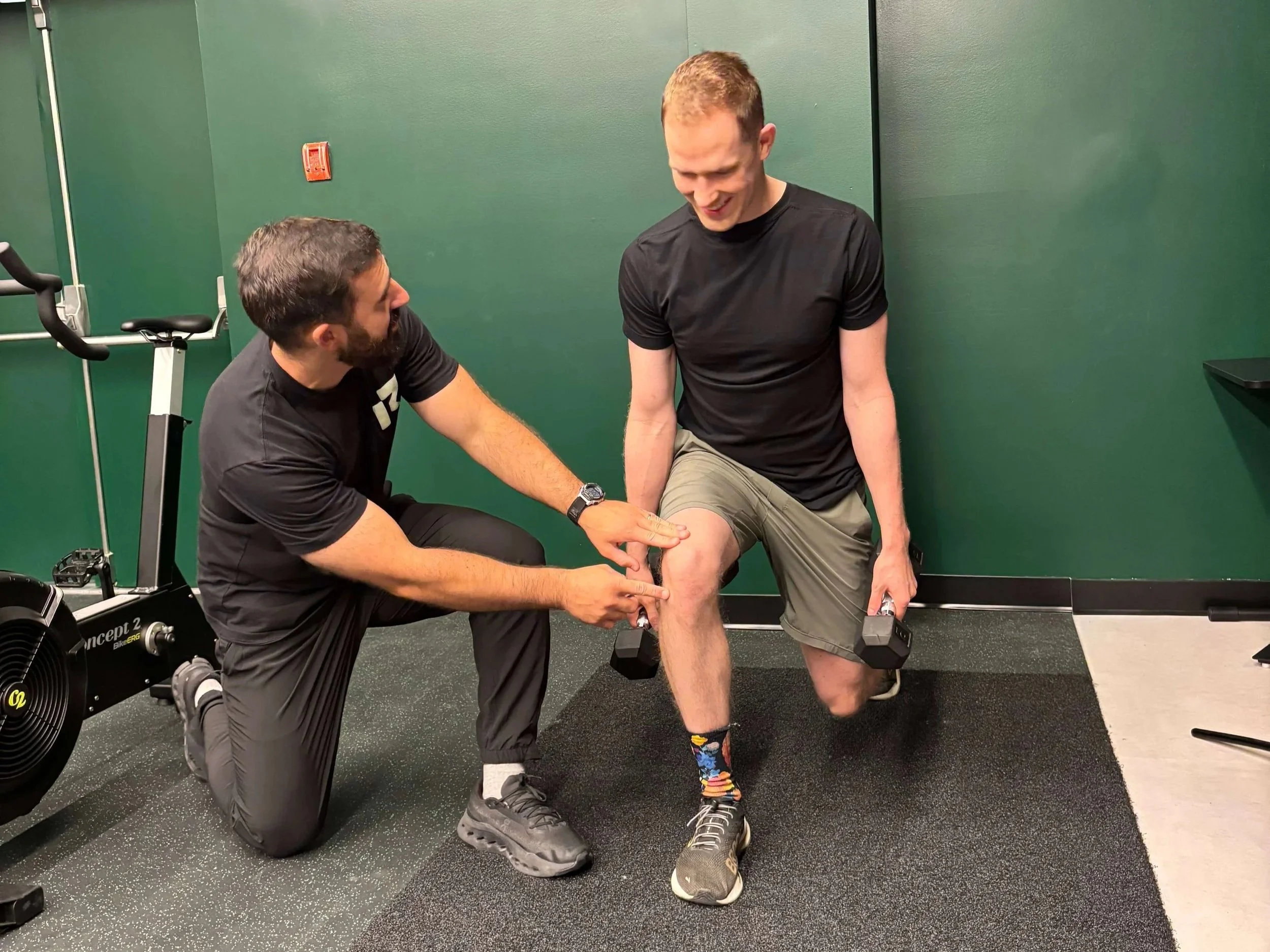
When Should You See a Physiotherapist?
Knee pain does not always mean you need to stop moving completely. In many cases, the right amount of movement and progressive exercise can actually be an important part of recovery.
It is worth speaking with a physiotherapist if your knee pain is:
Lasting longer than expected
Getting worse rather than better
Limiting your ability to exercise or participate in sports
Making stairs, walking, or everyday activities difficult
Associated with swelling, stiffness, or a feeling of instability
Preventing you from doing the activities you enjoy
A physiotherapist can assess your knee, identify factors that may be contributing to your symptoms, and develop a treatment plan based on your goals.
Quick tip: many of these injuries are caused by doing too much too soon. Something to keep in mind if you notice a pattern.
How Physiotherapy Can Help Knee Pain
Treatment will depend on the cause of your knee pain, but may include targeted strengthening, mobility exercises, movement retraining, education, and manual therapy when appropriate.
The goal is not simply to make your knee feel better for a few days. We want to help you understand your symptoms, build your capacity, and confidently return to the activities that matter to you.
Dealing With Knee Pain in Victoria?
If knee pain is keeping you from running, working out, playing sports, or simply enjoying your day, you do not have to figure it out on your own.
At Recharge Physiotherapy in Victoria, BC, our physiotherapists work with a wide range of knee injuries and pain conditions. We can help you understand what may be contributing to your symptoms and create a plan to get you moving forward.
Ready to take the next step? Contact Recharge Physiotherapy to book an assessment or reach out to our team with any questions about your knee pain. We would be happy to help you figure out where to start.
Knee pain should not have to decide what you can and cannot do. Let's get you moving again.
