
Maximize Your Workout: How to Train with a Bike Erg
Transform your fitness routine with a bike erg! Discover how to maximize your workout, boost endurance, and achieve your goals efficiently.
Benefits of Training with a Bike Erg
Low impact
Improve cardiovascular health and fitness
Able to tailor workouts to your specific endurance and strength levels
Whether you're looking to engage in a high-intensity interval training (HIIT) session or a steady-state endurance ride, a bike erg can accommodate your needs. This versatility ensures that you can progressively challenge yourself, allowing you to make continuous improvements in your fitness journey.
Understanding the Different Bike Erg Models
Before diving into your bike erg training, it’s essential to understand the various models available on the market. Different manufacturers offer unique features that can cater to specific fitness needs and preferences. The most common types of bike ergs include air resistance, magnetic resistance, and fan-based models.
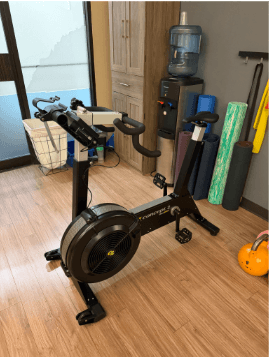
Air resistance bike ergs, such as those from Concept2 (we use this model at Recharge!), use a flywheel and damper system to create resistance. The harder you pedal, the more resistance you generate, offering a dynamic workout experience. These models are popular for their smooth, natural feel and the ability to adjust resistance simply by changing your pedalling speed.
Magnetic resistance bike ergs utilize magnets to create resistance, which can be adjusted manually or electronically. These models are known for their quiet operation and precise resistance settings. Additionally, magnetic resistance bikes often come with advanced features such as pre-programmed workouts and digital displays to track your performance metrics.
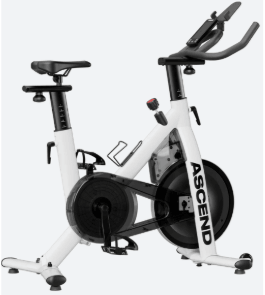
Move With Ascend. (n.d.).
Fan-based bike ergs uses air resistance to fuel your workout. They are perfect for users who seek higher intensity, shorter workouts and those who may want to include the upper body (such as with a Rogue Echo Bike). Understanding the differences between these models can help you choose the best bike erg that aligns with your fitness goals and training environment.
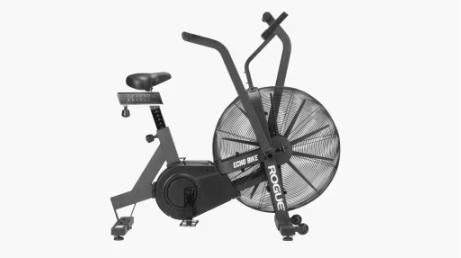
Rogue Fitness Canada (n.d.)
How to Properly Set Up Your Bike Erg for Optimal Performance
Setting up your bike erg correctly is crucial for having an effective and enjoyable workout. Begin by adjusting the saddle height. Stand next to the bike erg and align the saddle with your hip bone. When seated, your leg should have a slight bend at the knee when the pedal is at its lowest point. This ensures efficient power transfer and reduces strain on your knees.
The quickest way to be sure you have the correct height is to place your heel on the pedal and straighten your leg. If the pedal is all the way down, and your leg is straight, you’re in the right spot.
Next, fine-tune the handlebar position. The handlebars should be at a height that allows you to maintain a slight bend in your elbows while being comfortable for your back. Some rounding is okay! If your bike erg has adjustable handlebars, experiment with different positions to find the most comfortable setting for you.
Finally, ensure that the resistance settings are appropriately configured for your workout. If you are new to bike erg training, start with a lower resistance level and gradually increase it as your fitness improves. Pay attention to your body's feedback and make adjustments as needed. Proper setup not only enhances your workout efficiency but also ensures a safer and more enjoyable training experience.
Effective Bike Erg Workouts for All Fitness Levels
One of the most appealing aspects of bike erg training is its adaptability to various fitness levels. Whether you are a beginner or an experienced athlete, there are effective workouts to help you achieve your goals. For beginners, a simple steady-state workout can be a great starting point. Aim for 20-30 minutes of continuous pedalling at a moderate pace, focusing on maintaining a consistent heart rate/effort and steady breathing.
Intermediate users can incorporate interval training to increase the intensity and challenge their cardiovascular system. A popular interval workout involves alternating between 1 minute of high-intensity pedalling and 1 minute of low-intensity recovery. Repeat this cycle for 5-10+ rounds to build endurance and improve anaerobic capacity.
For advanced users, high-intensity interval training (HIIT) can take your workouts to the next level. A typical HIIT session on a bike erg may include 30 seconds of all-out sprinting followed by 30 seconds of active recovery. Repeat this sequence for 4-8+ rounds. HIIT workouts are especially popular for their time-efficient nature.
Incorporating Bike Erg Training into Your Fitness Routine
Integrating bike erg training into your existing fitness routine can provide a well-rounded approach to achieving your health and fitness goals. Start by determining how often you want to include bike erg sessions. For those starting out, aim for 1-3 sessions per week, allowing for adequate recovery between workouts.
If you're training for a specific event, such as a cycling race or triathlon, tailor your bike erg sessions to mimic the demands of the event. Include long endurance rides, interval training, and threshold workouts to build the necessary stamina and speed. By strategically incorporating bike erg training into your fitness routine, you can achieve a balance that can support your overall health and performance goals.
Tracking Your Progress: Metrics to Monitor on a Bike Erg
Monitoring your progress is essential for staying motivated and achieving your fitness goals.
Most bike ergs come equipped with digital displays that track key performance metrics. One of the most important metrics to monitor is your heart rate. Using a heart rate monitor can help you stay within your target heart rate zone, helping ensure that you're working at the right intensity for your fitness goals.
Another crucial metric is cadence, measured in revolutions per minute (RPM). Cadence provides insight into your pedalling efficiency and can help you optimize your performance. A higher cadence typically indicates a more efficient pedalling technique, while a lower cadence may suggest the need for adjustments in resistance or form. Aim for a cadence that feels sustainable and allows you to maintain proper form.
Distance and time are also valuable metrics to track. Monitoring the distance covered and the duration of your workouts can help you set and achieve specific fitness goals. For example, you might aim to increase your distance over a set period or reduce the time it takes to cover a certain distance. These metrics provide tangible evidence of your progress and can serve as motivation to keep pushing forward.
Combining Bike Erg Workouts with Other Training Methods
To maximize the benefits of your fitness routine, consider combining bike erg workouts with other training methods. Cross-training can help prevent plateaus, reduce the risk of injuries, and improve overall athletic performance. One effective approach is to incorporate strength training into your regimen. Weightlifting exercises, such as squats, deadlifts, and lunges, can enhance your lower body strength, which directly translates to improved performance on the bike erg.
Finally, consider integrating outdoor activities to add variety to your training. Activities like hiking, running, or swimming can provide a change of scenery and challenge your body in different ways. These outdoor pursuits can enhance cardiovascular fitness and mental well-being, offering a holistic approach to your fitness journey.
Conclusion: Elevate Your Fitness Journey with Bike Ergs
Incorporating a bike erg into your fitness routine can significantly elevate your training and help you achieve your health and fitness goals. The versatility and adaptability of bike ergs make them suitable for individuals of all fitness levels, from beginners to advanced athletes. By understanding the different models, setting up your bike erg correctly, and incorporating effective workouts, you can maximize the benefits of your training.
Whether you're looking to boost endurance, improve cardiovascular health, or simply enjoy a low-impact workout, a bike erg can be a valuable tool in your fitness arsenal. Start pedalling towards your goals and experience the transformative power of bike erg training.
Still Not Sure? We’re Here to Help!
Sarcopenia is a serious but manageable condition. Through evidence-based physiotherapy and patient-centred care, we can help you preserve strength, maintain independence, and improve quality of life.
Give us a call at 250-885-8405 or schedule an appointment and and we’ll help you find the right path forward.
References
Cleveland Clinic. (2023, June 1). High-intensity interval training (HIIT): It’s for everyone! Cleveland Clinic. https://health.clevelandclinic.org/think-you-cant-do-high-intensity-interval-training-think-again
Concept2. (n.d.). BikeErg. Concept2. https://www.concept2.com/ergs/bikeerg
Golden, N. (2022, December 20). What is steady-state cardio? NASM. https://blog.nasm.org/what-is-steady-state-cardio
Hurley, S. (n.d.). Cycling cadence: What is it, what’s most efficient, and cadence drills to make you faster. TrainerRoad Blog. https://www.trainerroad.com/blog/whats-the-most-efficient-cycling-cadence-and-how-cadence-drills-can-make-you-faster/
Move With Ascend. (n.d.). Ascend S2 magnetic spin bike – White. Move With Ascend. https://movewithascend.com/products/ascend-se-magnetic-spin-bike-white
Physiopedia contributors. (n.d.). Anaerobic capacity. Physiopedia. https://www.physio-pedia.com/Anaerobic_Capacity
Rogue Fitness Canada (n.d.). Rogue Echo Bike. Rogue Fitness Canada. https://www.roguecanada.ca/rogue-echo-bike