
Sarcopenia: More Than Just Muscle Loss – What Physiotherapy Can Do to Help
What Is Sarcopenia?
Sarcopenia is a progressive condition involving not only the loss of skeletal muscle mass but, more importantly, a reduction in muscle strength and function that can begin as early as the fourth decade of life and is more prevalent after the age of 60. Although commonly linked with ageing, sarcopenia is not an inevitable consequence of growing older.
From the lens of a physiotherapist, chiropractor, or athletic therapist, sarcopenia is much more than decreased muscle bulk—it's a decline in the functional capacity of muscles that can directly impair balance, mobility, and independence. Left unaddressed, it increases the risk of falls, fractures, and long-term disability.
Why Muscle Function Matters More Than Muscle Size
While the visible decline in muscle size is a hallmark of sarcopenia, research suggests that muscle function declines more rapidly than mass. Strength, coordination, and power are key indicators of how muscles are used in day-to-day activities—from standing up, climbing stairs, or carrying groceries.
Muscle fibres change with age. Fast-twitch fibres, which are responsible for explosive movements and quick reactions, tend to atrophy more than slow-twitch fibres. Neuromuscular changes, such as impaired nerve signals to the muscles, also contribute to functional deficits Clark & Manini, 2008.
This is why, in clinical practice, a rehab team places greater emphasis on functional testing and rehabilitation than simply focusing on body composition.
Common Causes and Risk Factors
Several interrelated factors contribute to the development of sarcopenia, including:
Ageing: Natural hormonal shifts and decreased activity levels impair muscle regeneration.
Sedentary Lifestyle: Physical inactivity accelerates muscle atrophy.
Inadequate Nutrition: Low protein intake and vitamin D deficiency are well-documented contributors.
Chronic Illness: Conditions like diabetes, COPD, and inflammatory diseases exacerbate muscle degradation.
Hospitalization or Immobilisation: Periods of bed rest or inactivity significantly impact muscle strength and coordination.
Diagnosing Sarcopenia in Clinical Practice
Early detection of sarcopenia allows for timely intervention and better outcomes.
According to the European Working Group on Sarcopenia in Older People, a clinical diagnosis of sarcopenia should include 1) low muscle strength (e.g. weak grip), 2) low muscle mass, and 3) reduced physical performance (e.g. slow gait speed)Cruz-Jentoft et al., 2019.
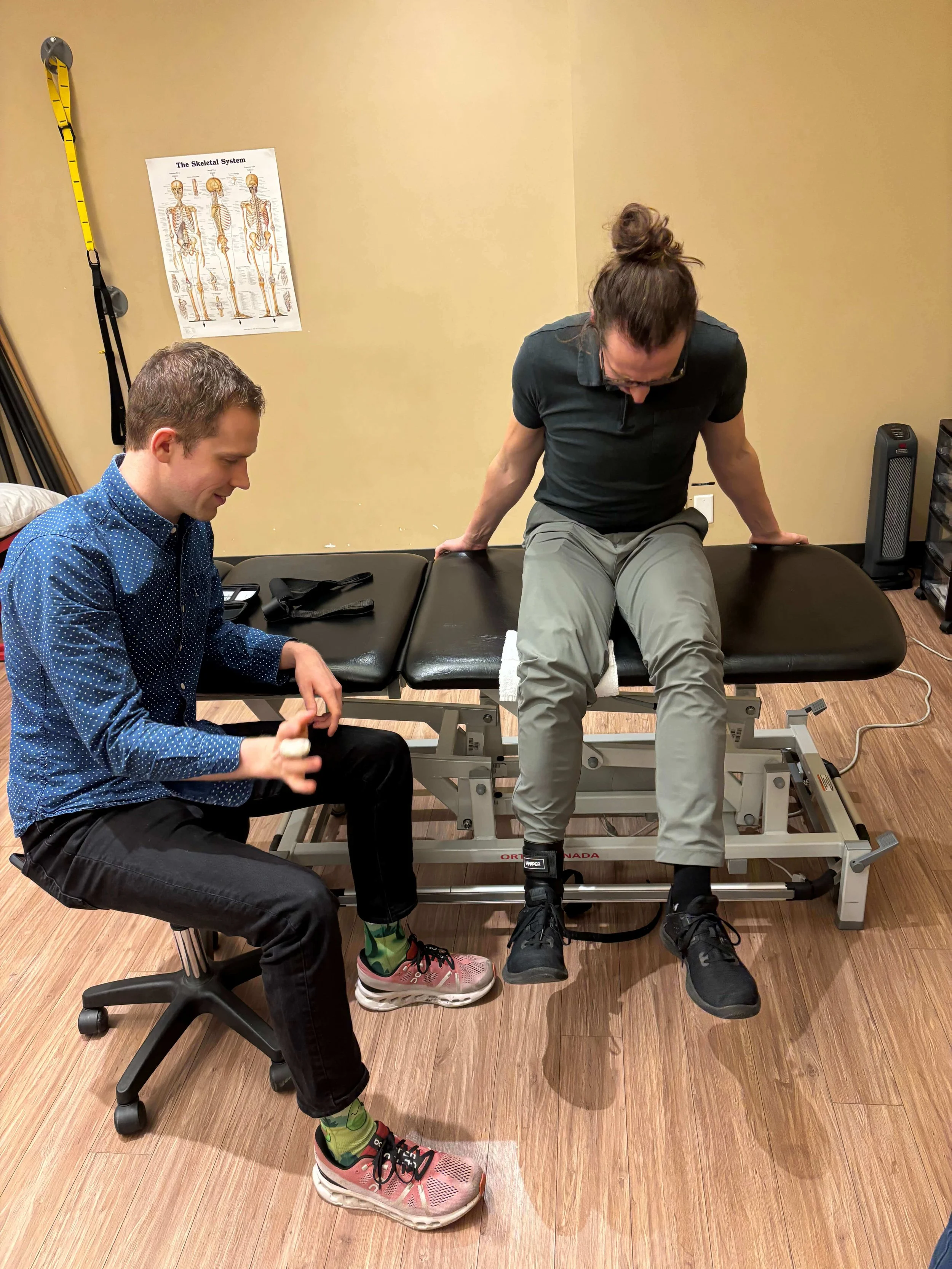
Physiotherapists use a combination of functional assessments to evaluate muscle performance, including:
Grip Strength Test – to measure upper limb strength.
Sit-to-Stand Test – assessing lower limb power.
Gait Speed – a critical predictor of fall risk and mortality.
Timed Up and Go (TUG) – evaluating balance, mobility, and fall risk.
SARC-F Questionnaire – a quick screening tool for clinicians and patients.
Advanced diagnostics, like DEXA (dual-energy X-ray absorptiometry) and bioelectrical impedance, may be used in medical settings to measure muscle mass, but functional performance remains the gold standard in physiotherapy.
Physiotherapy-Based Treatment and Management Strategies
At our clinic, we take a proactive and evidence-based approach to preventing and managing sarcopenia. Here's how physiotherapy can make a meaningful difference:
1. Progressive Resistance Training (PRT)
Evidence shows that resistance training is the most effective way to increase both muscle mass and functional strength in older adults. Programmes are customized based on baseline assessments and may include bodyweight movements, resistance bands, free weights, or machine-based exercises.
A 2022 meta-analysis supports that resistance training improves muscle strength and walking speed, especially when performed 2–3 times per weekLopez et al., 2022.
2. Functional Rehabilitation
We incorporate task-specific training that mirrors real-life activities—such as lifting, walking on uneven surfaces, or stair climbing—to ensure gains in therapy translate to improved day-to-day independence.
3. Balance and Fall Prevention
Since sarcopenia is a leading cause of falls in older adults, we include balance retraining, proprioceptive exercises, and mobility drills as part of a fall prevention strategy.
4. Patient Education and Home Programmes
We provide tailored home exercise plans to keep patients active between sessions. This ensures consistency and fosters long-term behaviour change.
Can Sarcopenia Be Reversed?
While sarcopenia cannot always be completely reversed, it can absolutely be slowed, stabilized, or improved with the right intervention. Patients often experience noticeable improvements in strength, balance, and confidence after just a few weeks of targeted physiotherapy.
A 2023 study in Frontiers in Nutrition found that combined exercise and nutritional interventions resulted in statistically significant gains in muscle performance among older adultsLi et al., 2023.
When to See a Physiotherapist
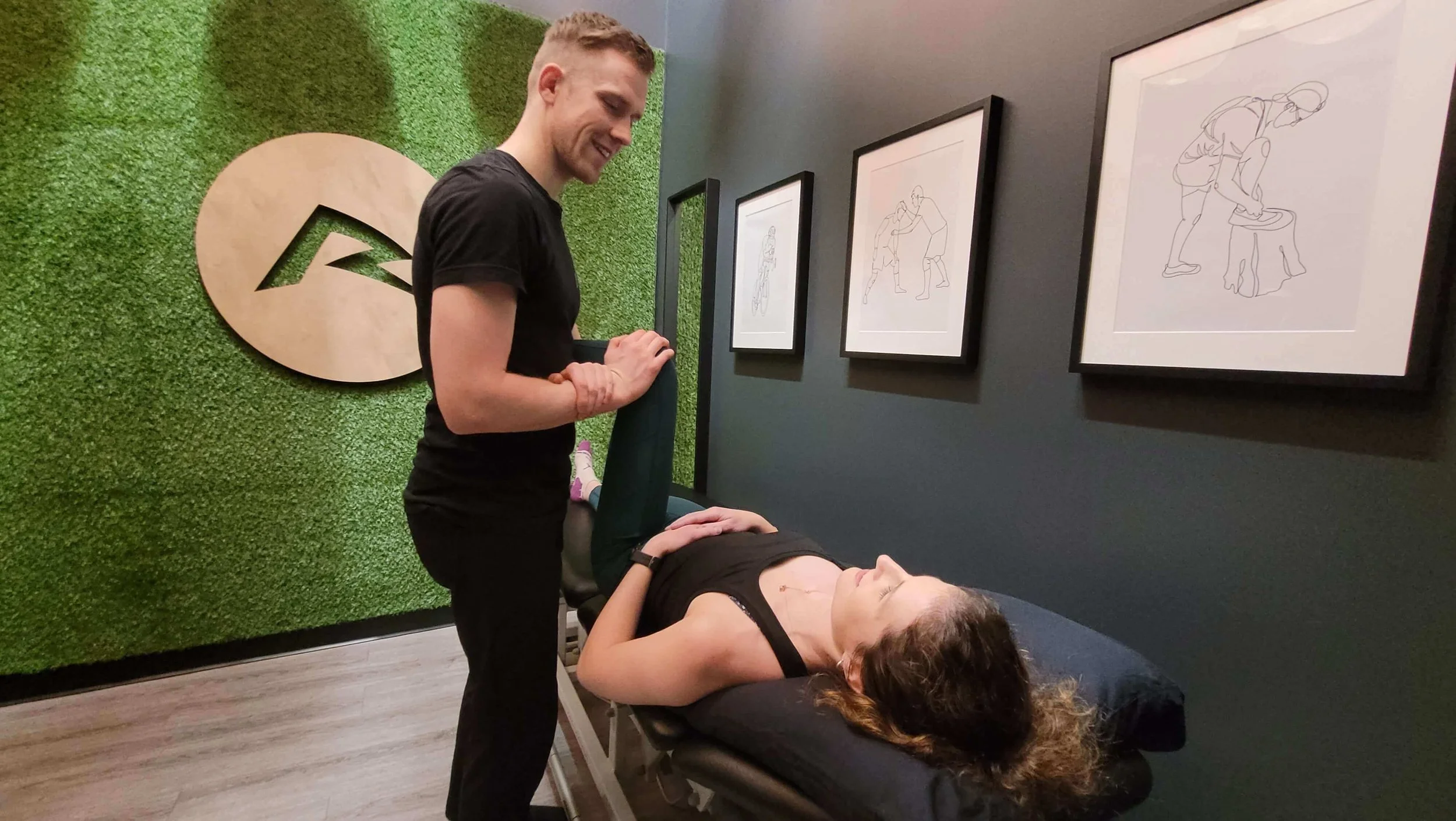
If you or a loved one are noticing any of the following, it may be time to book a physiotherapy consultation:
Difficulty rising from chairs or climbing stairs
Slower walking speed or fatigue during simple tasks
Fear of falling or recent falls
Early intervention is key. Our team can help you rebuild strength, regain confidence, and stay active at every stage of life
Still Not Sure? We’re Here to Help!
Sarcopenia is a serious but manageable condition. Through evidence-based physiotherapy and patient-centred care, we can help you preserve strength, maintain independence, and improve quality of life.
Give us a call at 250-885-8405 or schedule an appointment and and we’ll help you find the right path forward.
References
Cleveland Clinic. (April 2, 2026). Sarcopenia. Cleveland Clinic.https://my.clevelandclinic.org/health/diseases/23167-sarcopenia
Cruz-Jentoft, A. J., Bahat, G., Bauer, J., Boirie, Y., Bruyère, O., Cederholm, T., Cooper, C., Landi, F., Rolland, Y., Sayer, A. A., Schneider, S. M., Sieber, C. C., Topinkova, E., Vandewoude, M., Visser, M., & Zamboni, M. (2019). Sarcopenia: Revised European consensus on definition and diagnosis. Age and Ageing, 48(1), 16–31.https://pmc.ncbi.nlm.nih.gov/articles/PMC6297648/
Larsson, L., Degens, H., Li, M., Salviati, L., Lee, Y. I., Thompson, W., Kirkland, J. L., & Sandri, M. (2019). Sarcopenia: Aging-related loss of muscle mass and function. Physiological Reviews, 99(1), 427–511.https://doi.org/10.1152/physrev.00061.2017
Liu, S., Zhang, L., & Li, S. (2023). Advances in nutritional supplementation for sarcopenia management. Frontiers in Nutrition, 10, 1189522. https://doi.org/10.3389/fnut.2023.1189522
Sayer, A. A., et al. (2022). Sarcopenia: Definition, diagnosis, and treatment. Nature Reviews Disease Primers.https://pubmed.ncbi.nlm.nih.gov/35805870/